


For Business Owner: Understanding Worker Compensation Insurance in CA

Worker Compensation insurance is a crucial aspect of employee welfare and business operations in California. This document aims to provide a comprehensive overview of Worker Compensation insurance, including its purpose, benefits, requirements, and the claims process. Understanding these elements is essential for both employers and employees to ensure a safe and compliant workplace.
What is Worker Compensation Insurance?
Worker Compensation insurance is a type of insurance that provides financial and medical benefits to employees who are injured or become ill as a direct result of their job. In California, this insurance is mandated by law for most employers, ensuring that workers receive necessary care and compensation without needing to prove fault.
Purpose of Worker Compensation Insurance
- For employees, it ensures that they receive medical treatment and wage replacement if they are injured on the job.
- For employers, it limits their liability in case of workplace injuries, as employees generally cannot sue their employers for work-related injuries if they are covered by Worker Compensation.
Benefits of Worker Compensation Insurance
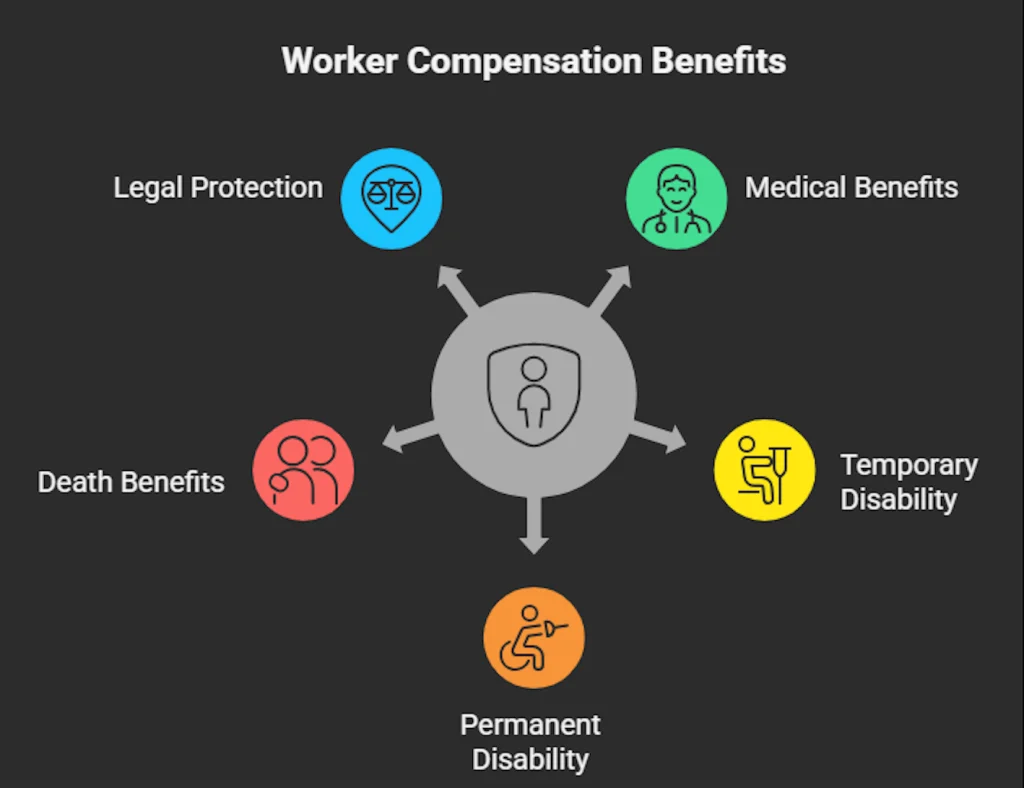
- Medical Benefits: Covers medical expenses related to the injury or illness, including hospital visits, surgeries, and rehabilitation.
- Temporary Disability Benefits: Provides wage replacement for employees who are unable to work due to their injury or illness.
- Permanent Disability Benefits: Offers compensation for employees who suffer long-term or permanent impairments.
Death Benefits: Provides financial support to the dependents of employees who die as a result of a work-related injury or illness.
Legal Protection: Protects employers from lawsuits related to workplace injuries, as long as they have Worker Compensation insurance.
Requirements for Worker Compensation Insurance in California
- Mandatory Coverage: Employers with one or more employees must provide Worker Compensation insurance.
- Insurance Providers: Employers can purchase insurance from private insurance companies, or they can self-insure if they meet specific criteria set by the state.
- Posting Requirements: Employers must display a notice informing employees of their rights under Worker Compensation laws.
- Reporting Injuries: Employers are required to report any workplace injuries to their insurance provider promptly.
The Claims Process
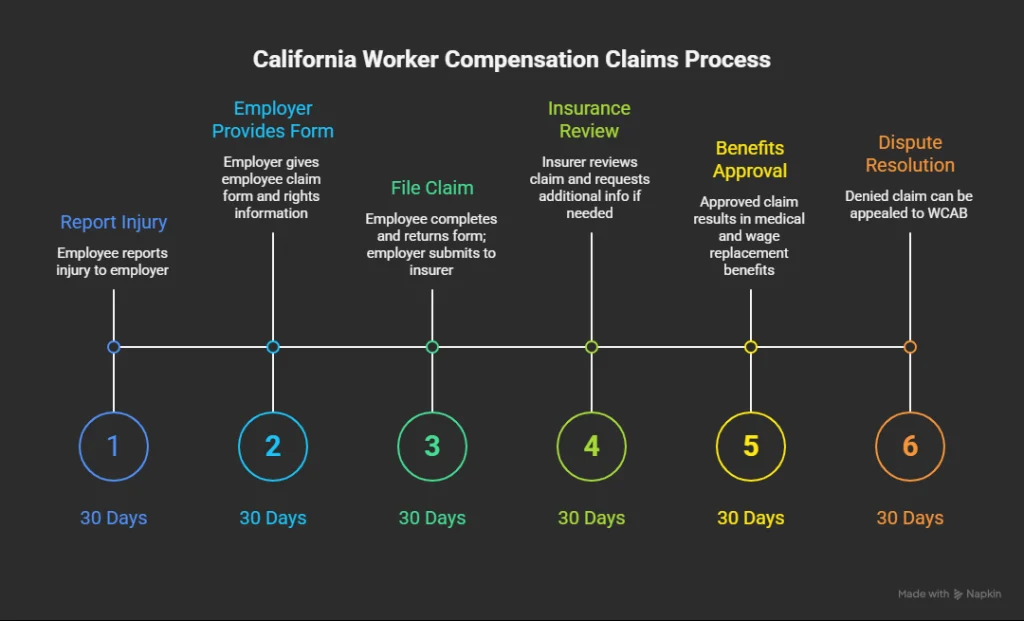
- Report the Injury: Employees must report their injury to their employer as soon as possible, ideally within 30 days.
- Employer’s Responsibilities: Once notified, the employer must provide the employee with a claim form (DWC 1) and information about their rights.
- Filing the Claim: The employee completes theclaim form and returns it to the employer, who then submits it to the insurance company.
Insurance Review: The insurance company reviews the claim and determines whether it is valid. They may request additional information or medical records.
- Benefits Approval: If the claim is approved, the employee will receive medical benefits and wage replacement as applicable.
- Dispute Resolution: If a claim is denied, the employee has the right to appeal the decision through the Workers’ Compensation Appeals Board (WCAB).
Common Misconceptions
- Only Physical Injuries are Covered: Many people believe that only physical injuries are covered under Worker Compensation. However, it also includes mental health issues and occupational diseases.
- You Can Sue Your Employer: While employees can sue third parties for negligence, they generally cannot sue their employer for work-related injuries if they are covered by Worker Compensation.
- Coverage is Optional: Some employers think that Worker Compensation insurance is optional, but it is mandatory for most businesses in California.
Conclusion
Popular Posts
HomeOwnership OC x VNARP Lunch & Learn: “Show Me the Money! Down Payment Programs to Help Your Clients Buy!”
Show Me the Money! Down Payment Programs to Help Your Clients Buy!
How VNARP and HomeOwnership OC Empowered Realtors to create Homeowners in 2026
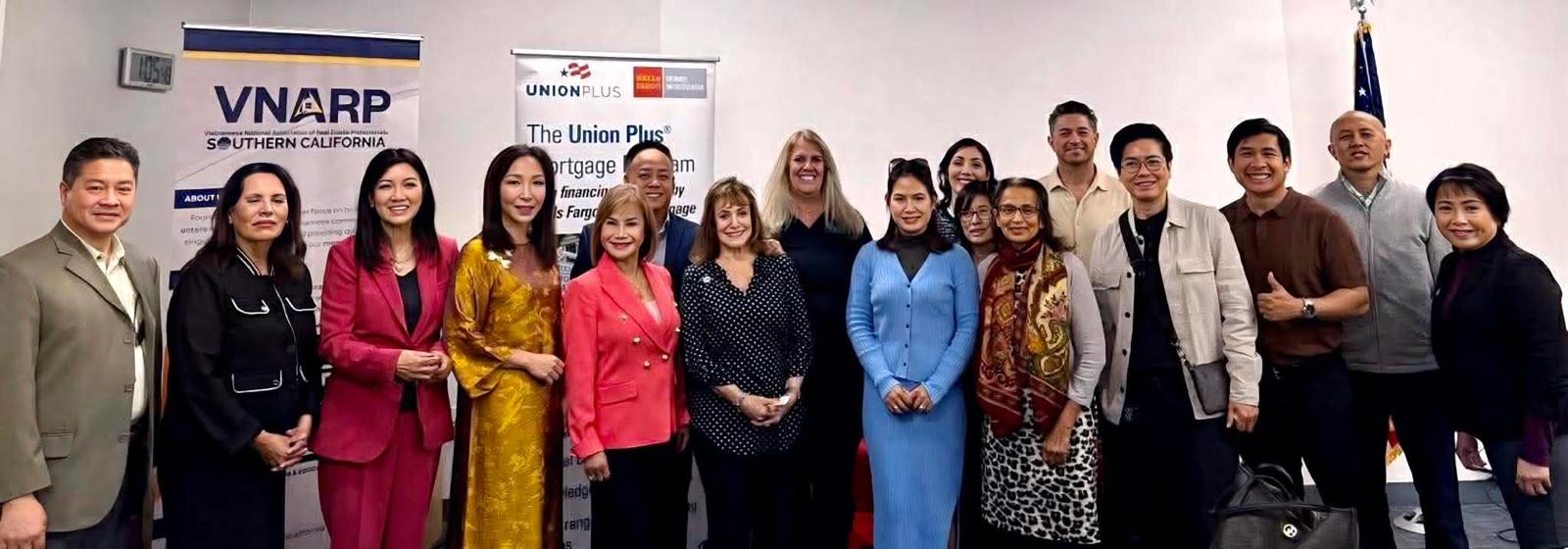
In the landscape of 2026 real estate, particularly within the high-demand corridors of Southern California, affordability remains the paramount barrier for aspiring homebuyers. Realtors are no longer just showing homes; they are navigating complex financial labyrinths alongside their clients. Recognizing this critical shift, the Vietnamese National Association of Real Estate Professionals (VNARP) Southern California Chapter partnered with HomeOwnership OC to host a pivotal educational event titled “SHOW ME THE MONEY! DOWN PAYMENT PROGRAM”.
This in-person “Lunch & Learn,” held on Thursday, February 26, 2026, at the Orange County REALTORS facility in Fountain Valley, provided local real estate professionals with the tools, knowledge, and actionable resources needed to help clients snag their dream homes in a challenging market.
The Mission: Breaking the Affordability Barrier
- The primary goal of the session was to empower Realtors to guide buyers who might otherwise be locked out of the market. Whether catering to true first-time buyers or those who simply needed a financial boost to bridge the gap between their savings and a down payment, the event provided crucial insights into available governmental assistance.
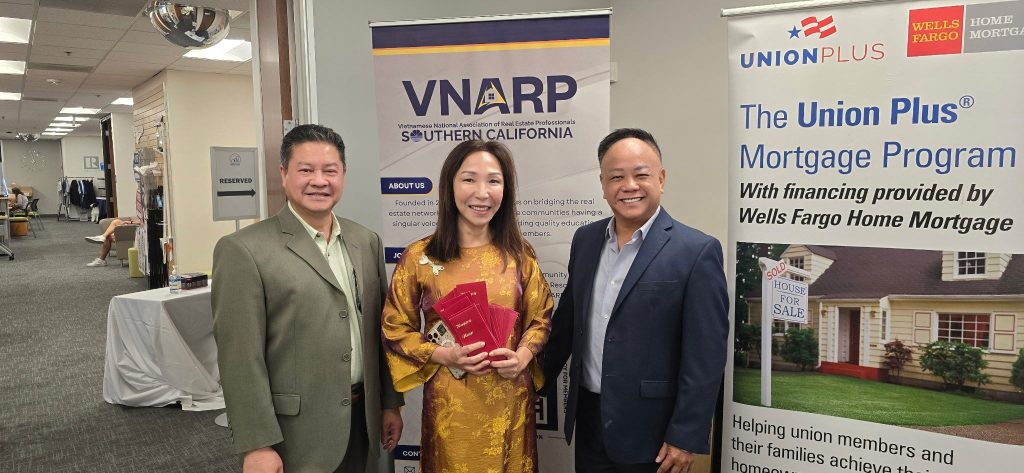
- The organizing team at VNARP emphasized the deeper meaning behind the event: to equip Realtors with the practical tools necessary to help more families say “Yes” to homeownership. The session was framed as a great opportunity for attendees to gain competitive advantages in today’s market, enabling them to close more transactions by solving their clients’ biggest hurdle.
Mastering Down Payment Assistance (DPA)
A central focus of the session was a comprehensive overview of existing Down Payment Assistance (DPA) programs. These programs, often structured as secondary loans, grants, or silent second mortgages, can drastically reduce the initial cash required from a buyer.
HomeOwnership OC experts provided details on diverse programs available at the state, county, and local city levels.
- County of Orange Mortgage Assistance Program (MAP): This program is designed to assist lower-income households. It typically offers assistance in the form of silent second loans, where principal and interest payments are deferred, making them a “silent” second lien on the property.
- City of Buena Park First-Time Home Buyer Program: This local program can provide substantial support, offering silent second loans.
- City of Anaheim Second Mortgage Assistance: Similar to others, this city-level assistance focuses on low-income homebuyers within city limits.
Spotlight on the CA Dream for All (Shared Appreciation) Program
The event’s most highly anticipated segment centered on the California Housing Finance Agency’s (CalHFA) Dream for All Shared Appreciation Loan program. The timing of the Lunch & Learn was strategic, as the program’s 2026 pre-registration portal opened just two days prior, on February 24, 2026.
How the Dream for All Program Operates in 2026
The Dream for All program offers up to 20% of the home purchase price in down payment assistance, with a maximum cap of $150,000 per household.
It is not a traditional loan but a Shared Appreciation Loan. For this assistance, when the homeowner eventually sells, transfers the property, or pays off the first mortgage in full, they must repay the original down payment loan plus a share of any appreciation (increased value) of the home. This structure eliminates the need for mortgage insurance for many buyers and significantly reduces monthly payments.

Key 2026 Eligibility and Application Updates
Attendees learned that the 2026 round of funding came with significant updates to ensure equitable distribution of state funds:
- First-Generation Requirement: At least one of the borrowers must be a first-generation homebuyer. This is typically defined as someone whose parents do not currently own a home.
- Lottery System: Due to extremely high demand exceeding available funding, CalHFA shifted to a randomized selection process (lottery) rather than a first-come, first-served application.
- Application Window: The pre-registration window for 2026 opened on February 24 and was scheduled to close on March 16, 2026. Selected applicants would receive a voucher and have 90 days to shop for a home.
- Income Limits: All borrowers must meet strict CalHFA income limits specific to the county they intend to purchase in.
HomeOwnership OC and VNARP leaders dissected the program’s unique model, ensuring Realtors could clearly explain both the benefits and the obligations to their clients.
The Crucial Role of Education
A major takeaway from the “Show Me the Money!” event was that financial assistance is rarely as simple as signing a paper. To succeed, Realtors must understand the educational roadblocks their clients will face.
CalHFA requires that all borrowers using their programs—including Dream for All and MyHome—complete a comprehensive homebuyer education course.
For the Dream for All program specifically, borrowers must take a specialized one-hour online course covering shared appreciation.
The event emphasized that having a certificate from a HUD-approved agency is a non-negotiable step toward conditional approval and receiving DPA funds. By guiding their clients to these resources early, Realtors prevent application delays.
Looking Ahead: Building Success Together

The “SHOW ME THE MONEY! DOWN PAYMENT PROGRAM” Lunch & Learn was widely declared a successful event by the organizers. It did not just provide information; it provided hope in a complex market by showing Realtors that financial barriers are not insurmountable.
In a traditional “VNARP style” celebration, the event also included a festive touch of Lunar New Year tradition, with “Li Xi” (Lucky Money) distributed to attendees, symbolizing prosperity and good fortune for their upcoming transactions.
VNARP expressed pride in its organizing team’s contribution to such a meaningful day. They reaffirmed their commitment to empowering real estate professionals with the dynamic tools and “Deep Work” knowledge needed to stay ahead in the market.
To stay informed about future educational sessions or to join the VNARP SoCal organizing team, professionals are encouraged to join the association’s dynamic network in Southern California.
Popular Posts
Welcoming the Year of the Horse: Van Gordon and VNARP SoCal Kick Off Tết 2026 in Little Saigon
As the crisp air of early 2026 settles over Orange County, there is a familiar electricity humming through the streets of Little Saigon. It is the season of renewal, reflection, and—most importantly—celebration.
I am beyond thrilled to announce that #VNARPSOCAL is serving as a proud community media partner for one of the most anticipated cultural milestones of the year: the Tết at Home – Vietnamese Tết Fair 2026.
For our community, Tết is more than just a date on the lunar calendar; it is the heartbeat of our heritage. This year’s kick-off event promises to be a landmark occasion, blending our deep-rooted traditions with fresh, modern energy.

A New Chapter at the Sapphire Center
This year’s celebration holds a special significance as we gather at the Sapphire Center—a venue many of us have long known and loved as the former Saigon Performing Arts Center. This space has always been a pillar of Vietnamese culture in Southern California, and seeing it transformed for the 2026 Tết Fair feels like the perfect metaphor for our community: honoring our history while embracing a bright, sophisticated future.

What to Expect: Tradition Meets Innovation
The “Tết at Home” Fair is designed to be an immersive experience. For the first time, several new cultural activities will be introduced to the public, offering even those who have celebrated Tết for decades a chance to see our traditions through a new lens.






The event will be a feast for the senses, featuring:
- Traditional Games: Rediscover the joy of folk games that have been passed down through generations.
- Live Cultural Performances: From the rhythmic beat of the lion dances to contemporary musical showcases.
- Festive Flavors: No Tết celebration is complete without the tastes of home. Expect an array of traditional foods that evoke memories of family kitchens and street markets.
- Community Connection: Beyond the sights and sounds, this is a space to reconnect with old friends and forge new partnerships.
Empowering Our Local Economy
At VNARP SoCal, we believe that cultural strength and economic growth go hand in hand. This fair isn’t just a celebration; it’s a platform. We are calling on local business owners and entrepreneurs to take part in this vibrant gathering.

Sponsorship opportunities are still available, offering a unique chance to showcase your brand to thousands of attendees while directly supporting the preservation of Vietnamese culture in the diaspora. You can view the full sponsorship details and packages here:



Join Us This Weekend!
The festivities are spread across two days of excitement, and I personally invite you, your family, and your colleagues to join us. Let’s fill the Sapphire Center with laughter and the spirit of Chúc Mừng Năm Mới.
- When:
- Saturday, Jan 30 (9 AM – 8 PM)
- Sunday, Jan 31 (10 AM – 9 PM)
- Where: Sapphire Center (16149 Brookhurst St, Fountain Valley, CA)
- Admission: Free!
As we prepare to welcome the New Year, let us do so together. Let’s honor our roots, support our local creators, and create new memories that will last a lifetime. I look forward to seeing you there!
The Best Time to Review Your Workers’ Comp Policy — Here’s Why
Did you know that January marks the highest volume of Workers’ Compensation policy renewals in the country?
This makes January a critical window when businesses actively review their coverage and look for better options. And this year, the timing is especially important. Here’s what’s happening in the market:
January = peak renewal season for Workers’ Compensation policies
Many other commercial insurance lines are seeing rate increases across multiple industries
Several competitors are increasing Workers’ Compensation rates, even for historically stable classes
However, there’s good news.
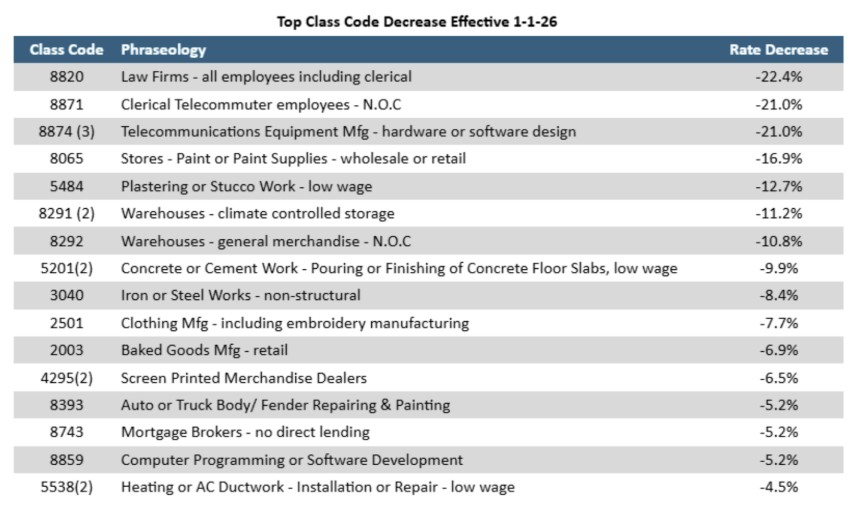
1. Rate Decreases for Select Industries - Effective January 1, 2026
While the overall California Workers’ Compensation rate is increasing by +1.5%, several key industries are seeing significant rate decreases effective:
- January 1, 2026 for new business
- January 1, 2026 for renewal business
We’ve attached a list of high-potential class codes and industries that are experiencing notable decreases, including professional services, manufacturing, warehousing, specialty trades, and more.
2. Why this matters to you
If your business falls under one of these class codes, you may be:
- Overpaying at renewal
- Missing an opportunity for immediate savings
- Renewing with a carrier that is increasing rates unnecessarily
A quick review of your Workers’ Compensation policy could result in meaningful premium savings—especially during this renewal window.
3. Next step
We encourage you to review your business classification and reach out to us to see if your industry qualifies for these lower rates. There is no obligation—just an opportunity to make sure your coverage and pricing are still working in your favor.
It is the best time to act. Let’s make sure you’re not leaving savings on the table.
New funding opportunity from the State of California
We’re excited to share a new funding opportunity from the State of California that could support entrepreneurs and community-oriented small business initiatives across the state.
Social Entrepreneurs for Economic Development 3 (SEED 3)
This grant program aims to encourage and support entrepreneurship among individuals who face significant barriers to employment — particularly those with limited English proficiency and immigrants — by providing micro-grants, entrepreneurial training, and technical assistance to help start or sustain small businesses that address social needs in their communities. (California Grants Portal)

What the SEED 3 Grant Offers
- Purpose: Support entrepreneurs in launching or maintaining businesses that address community needs and social challenges. (California Grants Portal)
- Target populations: Individuals who face employment barriers, including those with limited English proficiency and non-citizens (including DACA or TPS recipients), as well as U.S. citizens within those groups. (California Grants Portal)
- Who can apply: Businesses, individuals, nonprofits, legal entities, public agencies, and tribal governments. (California Grants Portal)
- Total funding: Approximately $6,750,000 available statewide. (California Grants Portal)
Why this matters
- Encourages inclusive economic development
- Helps overcome barriers to business ownership and growth.
- Provides both financial support and valuable training.
Important Dates
- The grant is expected to open January 26, 2026. (California Grants Portal)
- Full application details and guidelines will be available at that time via the California Grants Portal.
This opportunity could be highly valuable for entrepreneurs ready to make a positive impact in their communities while building a sustainable business.
For full details, eligibility criteria, and application instructions, please visit the California Grants Portal. If you would like assistance reviewing your eligibility or preparing an application, feel free to reach out.
California Small Business Alert: How to Get Up to $2,000 for Paid Family Leave Expenses
As a small business owner in California, you know that when an employee takes time off to bond with a new child or care for a sick family member, the impact is felt across the entire team. While California’s Paid Family Leave (PFL) program helps your employees with wage replacement, the burden of covering their duties often falls on your shoulders—and your budget.

The good news? The Paid Family Leave Small Business (PFL SB 4) Grant is here to help you bridge that gap.
1. What is the PFL SB 4 Grant?
Administered by the California Employment Training Panel (ETP) and the Labor and Workforce Development Agency (LWDA), this grant program is designed to help small businesses offset the costs associated with an employee being out on PFL.
Whether you need to cross-train existing staff to pick up the slack or hire and train a temporary replacement, this grant provides direct financial relief to keep your operations running smoothly.
2. How Much Can You Receive?
The grant amount depends on the size of your workforce:
- Businesses with 1–50 employees: Eligible for $2,000 per employee utilizing PFL.
- Businesses with 51–100 employees: Eligible for $1,000 per employee utilizing PFL.
3. What Can the Funds Be Used For?
The grant is flexible, allowing you to cover various “out-of-pocket” costs that arise when an employee is on leave, including:
- Cross-training: Paying for the time and resources to train current employees to handle new duties.
- Upskilling: Improving the skills of remaining staff to ensure productivity doesn’t drop.
- Recruitment: Covering marketing and hiring costs if you need to bring in temporary help.

4. Is Your Business Eligible?
To qualify for the PFL SB 4 Grant, your business must meet the following criteria:
- Size: Employ between 1 and 100 employees.
- PFL Usage: Have at least one employee who is currently utilizing (or has recently utilized) the California PFL program.
- Registration: Be registered to do business in California and in “Active” status with the Secretary of State.
- Tax ID: Have an active California Employer Account Number (CEAN).
Note for PEO Users: If you use a Professional Employer Organization (PEO) for payroll, you are only eligible if your company is listed as the employer on the CEAN. If you file under the PEO’s account number, you may not qualify.

5. How to Apply
The application process is designed to be quick—typically taking about 15–20 minutes. You will need:
- Your 8-digit California Employer Account Number (CEAN).
- Your business’s NAICS code.
- The 10-digit EDD Customer Account Number of the employee on leave.
The current window for applications is open, but funds are often distributed on a first-come, first-served basis. If you have employees planning for leave or currently away, now is the time to act.
Apply or learn more at:
A New Era of Leadership: Celebrating the 2026-2027 VNARP SoCal Installation Gala
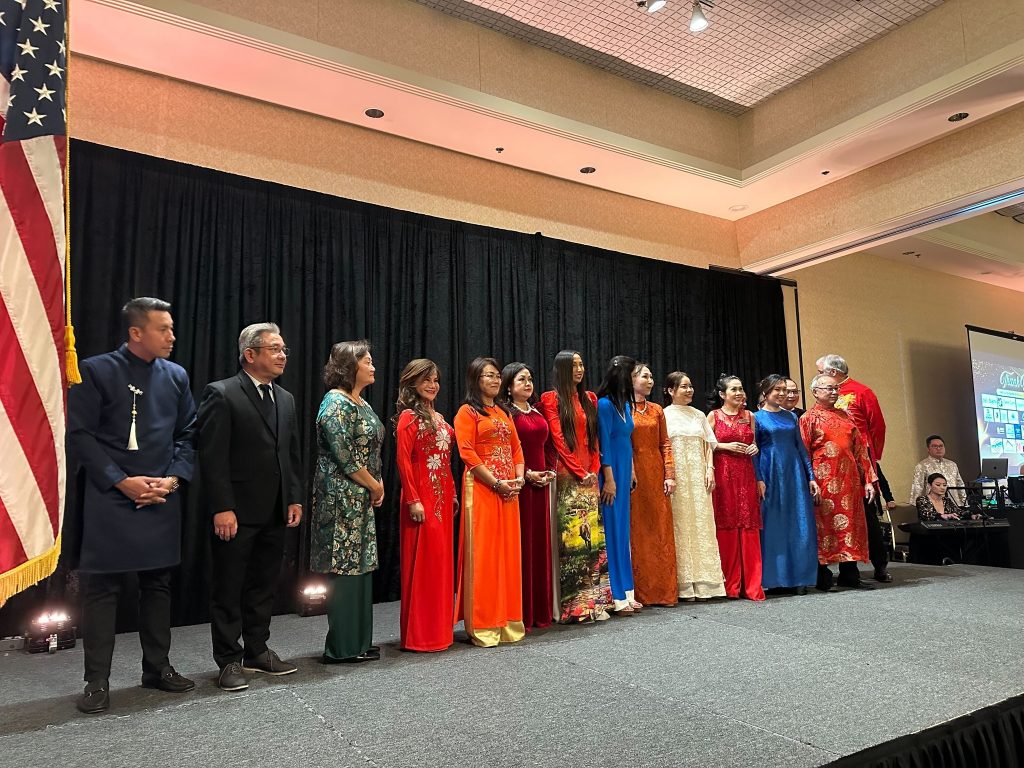
ANAHEIM, CA — The air at the Anaheim Marriott Suites on January 15, 2026, was charged with more than just the usual professional networking; it was a night of homecoming and high-stakes ambition. The Vietnamese American Real Estate Professionals (VNARP) Southern California chapter hosted its 2026–2027 Board of Directors Installation Gala, marking a milestone year for an organization that has become a pillar of the local real estate landscape.
1. The Perfect Harmony: Professionalism Meets Soul
The success of the evening was rooted in a rare and deliberate atmosphere curated by the organizing team. Breaking away from the stiff formality of traditional corporate events, the Gala struck a beautiful balance. The night was a vibrant tapestry of professional milestones woven together with laughter and genuine connection.






Between the formal induction ceremonies, guests were treated to a mix of relaxed social activities and high-energy traditional cultural entertainment. From the resonance of the music performances to the shared joy in the room, the event captured the heart of the Vietnamese American community: a group that works with intensity but celebrates with soul.
2. A Tribute to Partnerships: Old Friends and New Journeys
The soul of VNARP has always been its relationships, and the Gala served as a grand stage for gratitude.
To Our New Partners: The organization extended its deepest thanks to the new faces who have recently joined the mission. These are partners who found a common vision in VNARP’s commitment to the community and have chosen to believe in this journey from the very start of this new chapter.
To Our “Old Friends”: The night was equally a celebration of long-term loyalty. VNARP honored those who have stood side-by-side with the organization for years, witnessing each other’s growth event by event. This includes cherished partners like VBI (Vietnamese Business Initiative), Orange County REALTORS®, and Homeownership OC.
A Seat at the Table: The presence of city officials from Garden Grove and Irvine underscored the political and civic weight VNARP carries in Southern California, signaling a unified front in addressing housing and professional standards.

The evening also paused to recognize the “engine room” of the event—the organizing team. Their dedication of time, energy, and unyielding enthusiasm was the invisible force that turned a complex logistical plan into a flawless, memorable success.
3. President Van Gordon’s Five-Year Legacy
The undisputed “main character” of the evening was Van Gordon, who was officially installed as the President of VNARP SoCal for the 2026–2027 term.
Van’s ascent to the presidency is the definition of a five-year journey through “thick and thin.” Having been a core part of the Leadership Team for half a decade, she has been a witness to—and a driver of—the organization’s evolution. Van was there for the soaring victory moments, but more importantly, she was the steady hand that helped the chapter strive to overcome shortages and obstacles. Her story is one of total devotion; she has poured everything she has into the growth of VNARP SoCal from its earliest days.

Her installation isn’t just a change in leadership; it is a celebration of a leader who has earned her place through years of sacrifice and unwavering service.
4. Looking Toward 2026 and Beyond
As Van Gordon takes the helm, supported by a robust network of old and new friends, the 2026–2027 term promises to be a period of significant expansion. The Gala at the Anaheim Marriott Suites was not just a look back at what has been achieved, but a bold statement of what is yet to come for the Vietnamese American real estate community.Her installation isn’t just a change in leadership; it is a celebration of a leader who has earned her place through years of sacrifice and unwavering service.
Why “Good Years” Are When Smart Business Owners Fix Risk
Most business owners think about insurance and risk only when something goes wrong.
- A fire.
- A lawsuit.
- A cyber scare.
- A claim they didn’t expect — or worse, one that wasn’t covered.
But here’s the truth we see every day at SohoSocal: The best time to fix risk is when nothing is broken. And January — when businesses are profitable, focused, and planning — is the most overlooked opportunity to protect everything you’ve built.
1. The Dangerous Comfort of a “Good Year”
If last year was strong, you’re not alone.
- Revenue grew.
- Staff expanded.
- New locations, new equipment, new clients.

That’s great news — but it comes with a quiet side effect: Your risk almost always grows faster than your insurance.
We regularly meet successful business owners who:
- Haven’t updated coverage in years
- Added payroll, locations, or services without adjusting limits
- Assume “we’ve never had a claim” means “we’re fine”
Unfortunately, that assumption is often what turns a manageable loss into a major setback.
2. Risk Doesn’t Show Up Loud — It Builds Quietly
Most serious losses don’t come from dramatic events. They come from small gaps:
- Haven’t updated coverage in years
- Added payroll, locations, or services without adjusting limits
- Assume “we’ve never had a claim” means “we’re fine”

None of these feel urgent. Until suddenly, they were.
3. Insurance Is Not the Strategy — It’s the Tool
This is where many business owners get frustrated.
They don’t want:
What they do want is:
- More paperwork
- More policies
- More premium
- Fewer surprises
- Predictable outcomes
- Confidence that one incident won’t undo years of work
They don’t want:
- More paperwork
- More policies
- More premium
What they do want is:
- Fewer surprises
- Predictable outcomes
- Confidence that one incident won’t undo years of work
That’s why we believe insurance should support a risk strategy, not replace one.

At SohoSocal, we look at:
- How your business actually operates
- Where losses would hurt the most (cash flow, reputation, growth)
- Which risks you should transfer, reduce, or simply be aware of
Because not every risk needs more coverage — but every risk should be intentional.
4. Why January Matters More Than You Think
January is powerful because:
- Claims history is clean and fresh
- Underwriters are more flexible
- Budgets are being set, not squeezed
- Decisions are proactive — not emotional

In other words, it’s when smart adjustments cost the least and protect the most. Instead of asking: “Do I have insurance?” – Try asking: “If something unexpected happened this year, would my business recover — or react?”
That answer tells you everything.
5. A Final Thought
- Risk planning isn’t about fear.
- It’s about freedom.
- Freedom to grow.
- Freedom to hire.
- Freedom to take opportunities — knowing your foundation is solid.
That’s what we help business owners build every day.
If January is the month you get clear on risk, the rest of the year gets easier.
—
SohoSocal Risk Intelligence
Helping business owners protect what they’re building — and why it matters.
Recently, the Vietnamese government has opened the real estate market to foreign buyers, including Vietnamese Americans who do not yet hold a Vietnamese passport. This policy, which allows ownership of properties—particularly those in high-rise buildings—has attracted significant interest from investors and business communities.
Currently, Soho SoCal is implementing a strategy to help the Vietnamese community in the U.S. gain more information and knowledge about purchasing property in Vietnam. For us, business is not only about generating revenue and cash flow, but also about creating value, inspiration, and hope — helping one another to share and spread these values when returning to Vietnam.